Table Of Content

The Fondation Claude Monet is a nonprofit organisation that runs and preserves the house and gardens of Claude Monet in Giverny, France, where Monet lived and painted for 43 years. Monet was inspired by his gardens, and spent years transforming them, planting thousands of flowers. He believed that it was important to surround himself with nature and paint outdoors.
The Louvre and Musée d'Orsay
Sotheby’s latest estimate for the oil painting is $800,000–$1.2 million. Monet's house and gardens at Giverny are an understandably popular destination and can get very crowded so although this is a very rewarding and incredibly beautiful place, it is also far from tranquil. Although Monet once had a vast collection of paintings that he acquired from his peers Cézanne, Caillebotte and Renoir, the originals are now mainly housed in the Musée d’Orsay in Paris. However, you can still see excellent replicas in Giverny, along with Monet's impressive collection of Japanese prints.
Rhône river cruise: Roman ruins & truffles

Impressionist İbrahim Çallı’s paintings portrayed the society in which he lived in a very raw sense. The Glasgow Boys were a group of Scottish Impressionists who placed the city of Glasgow on the artistic scene in the last third of the 19th century. In the final years of the 19th century, the art scene in Zagreb, Croatia, was pretty vibrant. Well, we’re now making sure that we don’t all work too closely together, so we work at least a few metres away from one another. That said, sometimes we work up to fifty metres away from each other because the gardens are so large!
The Ultimate Guide to Visiting Giverny: Monet's House & Garden - solosophie
The Ultimate Guide to Visiting Giverny: Monet's House & Garden.
Posted: Mon, 04 Mar 2024 08:00:00 GMT [source]
Luxurious Boutiques in Paris
If this art resonates with you, don’t hesitate to visit the Musée des Impressionnismes in Giverny, just a stone’s throw from Claude Monet’s home. A corpus of prints by Impressionist artists such as Mary Cassatt is on display. If you wish to visit the house, please note that there is no PRM access, with steep and sometimes cramped staircases, as it was not designed to accommodate the public. If you’re visiting the House and Gardens of Claude Monet, we recommend you allow between 2 and 2.5 hours to wander the aisles of this botanical gem in Giverny. There’s sometimes a bit of a wait to get to the House of Claude Monet. The majority of Monet's paintings are kept in the Musée Marmottan Monet.
Outdoor painting class at la Ferme Saint-Siméon
We can all admire the way that Monet once utilized his house and gardens. Therefore, all of the inspiration that he needed was right on his doorstep. We can admire and recreate the beauty we see even in the most basic spaces around us. Monet created such beauty even towards the end of his life, despite suffering from cataracts in both eyes aged 72.
The tour begins in Monet’s vivid yellow dining room – restored to precision – with its vast collection of Japanese prints on the walls. The furniture, also painted yellow, was considered very modern at the time. In the glass cabinets are displayed blue earthenware crockery, and the yellow and blue set requested by Monet for special occasions. The Water Garden is instantly recognizable for its graceful Japanese-style footbridge, poetic willows and water lily ponds. Monet designed these expressly in order to create a subtle interplay play of light and shadows, and painted them at different times of day for his celebrated Nympheas series. We mentioned it earlier, but the painter-gardener’s passion for Japanese culture is unquestionable.
The Clos Normand
The main path of Clos Normand is covered with metallic arches on which roses grow. The House and Gardens of Claude Monet is the beautifully restored home of the painter Claude Monet, the founder of French Impressionist Painting. Claude Monet lived in this place from 1883 until his death in 1926. Many of his paintings were painted in Giverny, the village where his home is located, especially in his own gardens. A painting by Pissarro, Paysage aux Pâtis, Pontoise, la moisson (1873), and Childe Hassam’s View of Broadway and Fifth Avenue (1890) have estimates of between $2.5m and $3.5m, and $800,000 and $1.2m, respectively.
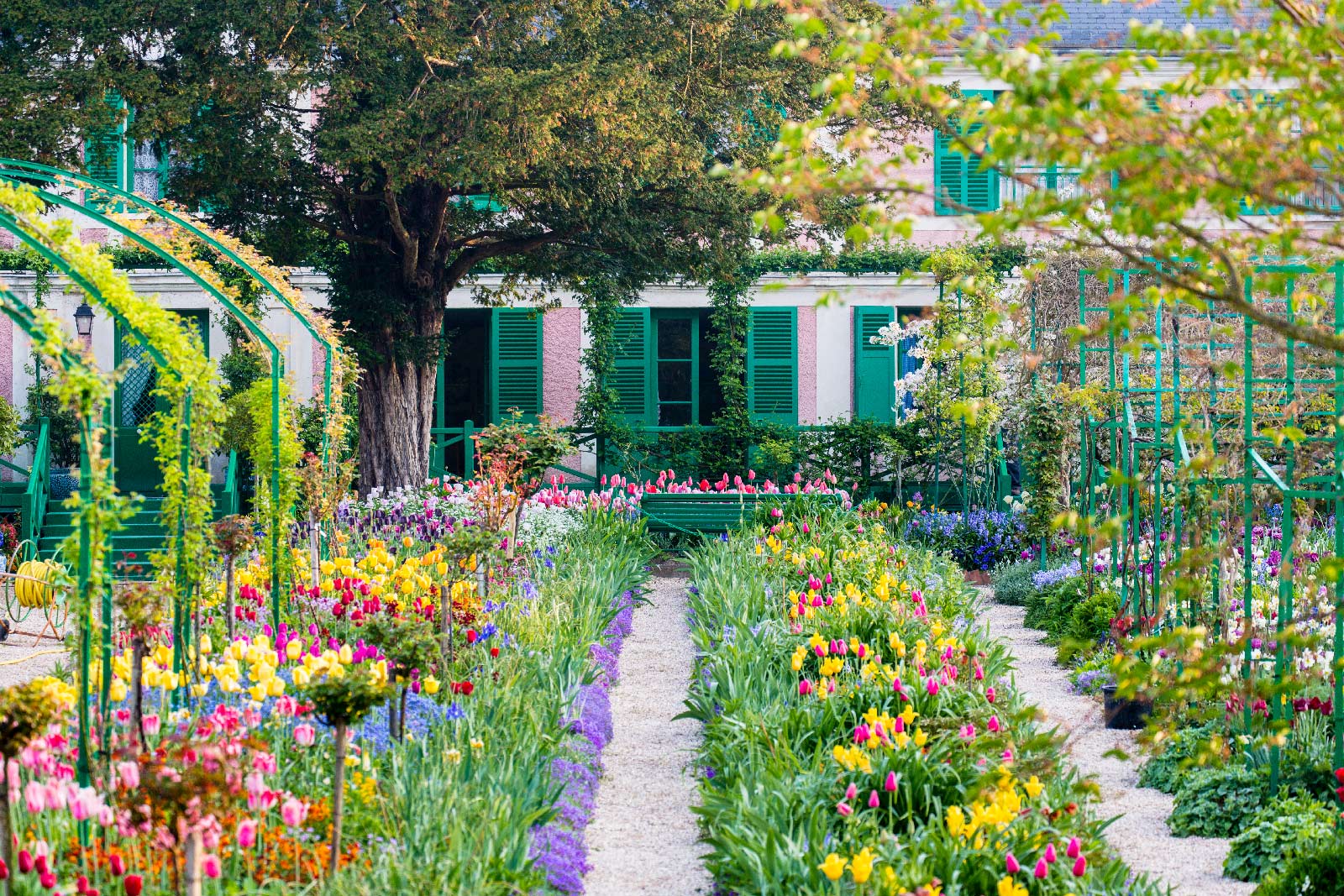
The Gardens of Giverny with children
A look at Claude Monet's home where masterpieces came to life - TODAY
A look at Claude Monet's home where masterpieces came to life.
Posted: Wed, 19 Jul 2023 07:00:00 GMT [source]
The studio/lounge’s restoration was entrusted to Hubert Le Gall and around 80% of the existing furniture was reused. Claude Monet lived for forty-three years, from 1883 to 1926, at his house in Giverny, Normandy. With a passion for gardening and colours, he conceived his flower garden (Clos Normand) and water garden as true works of art. Visitors to his house and gardens can still feel the atmosphere which reigned at the home of the Master of Impressionism and marvel at the floral compositions and water lilies, his greatest sources of inspiration. At the turn of the century, the garden, more particularly the water lily pond, became Monet’s favorite motif and the instrument of a radical evolution of his painting. From 1898, he had the idea of using the pond as inspiration for a decor.
He had suffered from visual problems since 1905, giving him a unique perception of color. Art historians often refer to the artist’s “blue period” and “red period”. In general, we remember Monet today for his inventiveness with color. Furthermore, Monet lived here for 43 years from 1883 until his death in 1926. He wished to create a space in which he could simultaneously live and paint.
We imagined Claude Monet working in this verdant park to turn it into the incredible botanical ensemble it is today, in bloom all year round. The marriage of species from all over the world, this assembly of plants each with their own needs and characteristics, is almost a work of goldsmith. Come closer and admire the sky surface reflected in the pond where colorful water lilies float. It was this magical spectacle that also transported us, and which Claude Monet masterfully transcribed in his work. Claude Monet’s estate reveals many references to his fascination with the Rising Sun.
In the houses he previously rented, he had endeavoured to arrange the gardens to his liking, accommodating the owners’ requirements. The acquisition of Giverny’s house finally allowed him to give free rein to his imagination. Bill Rau, the owner of MS Rau gallery, predicts that the lawsuit will be settled without conflict. “All of the parties have reached an amicable agreement to happily return the pastel to its rightful heirs in light of the work’s provenance, which was of course completely unknown to all of the trading parties,” Rau wrote. In 2019, Rau sold “Sea Side” to a Sulphur couple, Dr. Kevin Schlamp and Bridget Vita.
Several Impressionists were interested in this Japanese art and drew inspiration from it. Whether genre scenes, landscapes or portraits, Japanese art played a major role in the aftermath of Impressionism and the evolution of Western art in the late 19th and early 20th centuries. With almost 630,000 visitors expected in 2022, according to the Claude Monet Foundation, Giverny is a popular destination for tourists. This can be particularly busy during the peak season from June to September. To avoid queues, we recommend weekday mornings or afternoons in spring, late summer and autumn.


No comments:
Post a Comment